
Time, like a river, flows ever onward, yet some moments become polished stones in the stream of memory. I’m writing this in 2026, but my mind drifts back to 2022 – a year that roared with colossal releases, yet whispered its truest treasures through quieter lands. Did I know then what would linger? Perhaps. The world was obsessed with towering sequels and epic sagas, and while they danced in the spotlight, I found my own symphony in unexpected corners. What makes a game resonate across the years? Is it the scale, or the secret it shares only with you? Here are ten that became part of my story, each a verse in a poem I still recite.
10 Bear and Breakfast
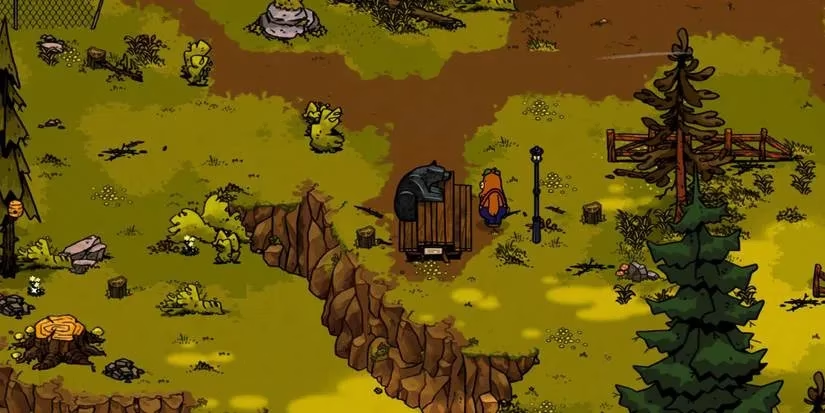
In a world that often demands blood and battle, what is the value of a gentle heartbeat? Bear and Breakfast answered that question with an amiable bear and a dream of renewal. I stepped into the paws of a furry hotelier, breathing life into forgotten glades one cozy room at a time. The loop was simple – gather materials, decorate, welcome quirky guests – but it was the kind of simplicity that wraps around you like a warm blanket. There was no crushing urgency, no sharp spike of anxiety; just a light-hearted management sim that invited me to multitask my way through a charming, pun-filled world. The cast of characters, from a sarcastic bird to a mysteriously trusting protagonist, kept the humor blooming. Moving my business from forest to mountain felt less like progress and more like a leisurely walk through a storybook. Is there a place for softness in gaming? This game proved that sometimes, all you need is a cup of tea, a creaky floorboard, and a bear with a business plan.
9 Card Shark
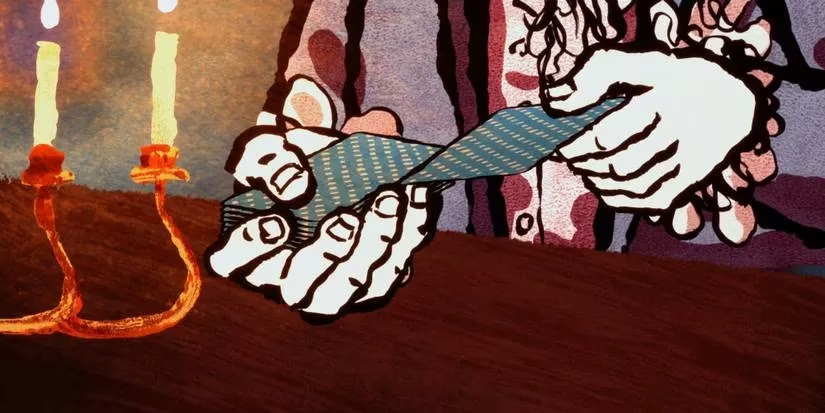
How often does a game make you feel like a rogue poet, spinning illusions with your fingertips? Card Shark was a chance discovery – or was it fate, dealing me an ace? Set in eighteenth-century France, it thrust me into a world of political intrigue and high-stakes deception, where the only weapon was a well-executed card trick. The gameplay itself was a delicate dance of memorized shuffles and subtle gestures, each cheat a small victory against pompous aristocrats and historical luminaries. I’ll never forget swindling Voltaire and feeling the rush of ill-gotten livres. It wasn’t merely about winning; it was about the art of the lie, the thrill of knowing that every polite nod hid a scheme. Could a period piece built on such niche mechanics ever feel so alive? Card Shark whispered yes, with a sly grin, and I was utterly charmed.
8 Warhammer 40,000: Darktide
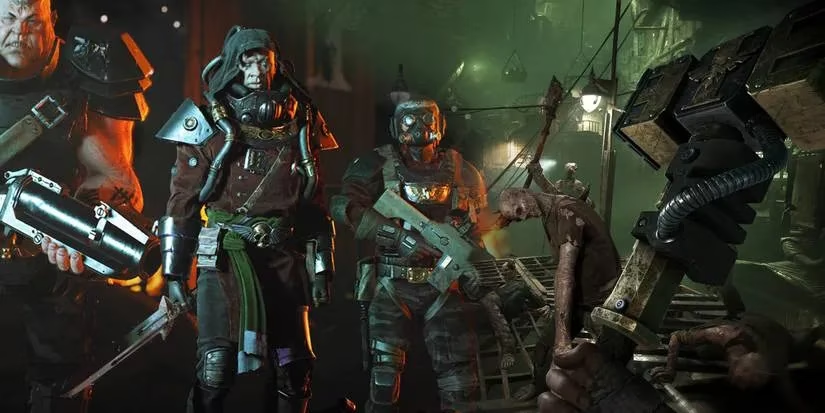
Contradictions can be beautiful. Darktide is a game I have criticised more than I have praised, yet my hours logged tell a different truth. The narrative was hollow, the characters mere echoes, and the launch felt like a skeleton awaiting flesh. But then, with friends, I’d plunge into the underhive, and something primal would ignite. What is it about beating back the legions of Nurgle, shoulder to shoulder, battered but not beaten, that transcends a game’s flaws? The combat was a furious ballet of chainswords and bolter fire, the escape from a desperate battle a shared gasp of relief. That feeling – raw, tense, triumphant – was enough to carve a place on this list. Did I love Darktide? I’m still not sure. But did it make my heart pound in ways few others could? Absolutely.
7 A Plague Tale: Requiem
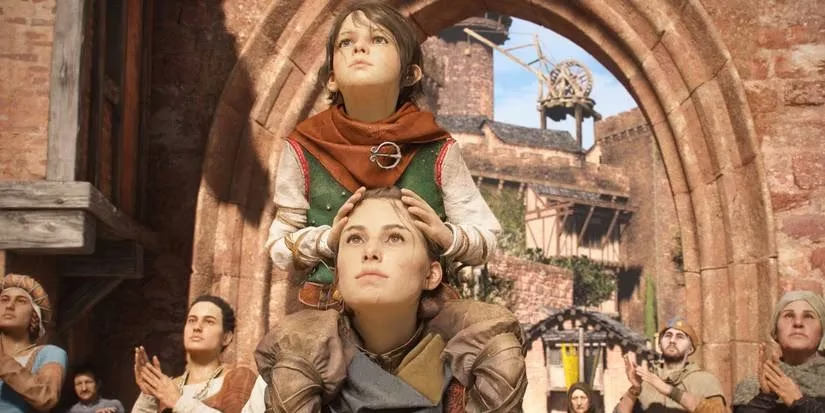
The south of France has never been so beautiful, nor so terrifying. I returned to the journey of Amicia and Hugo with a heart full of hope and dread. Requiem didn’t reinvent its predecessor’s wheel, but it perfected the spokes: the bond between siblings, the gnawing horror of the rat tides, the brutal stealth. Yes, there were moments when another light-manipulation puzzle made me sigh – is throwing rocks to distract guards still the pinnacle of our craft? – yet the narrative gripped me like a vice. The new combat options encouraged a more forceful approach, a reflection of Amicia’s desperation. But it was the story, a harrowing tale of survival, impossible choices, and the cost of love, that carried me through the darkness. Could I look away? I couldn’t.
6 Grounded
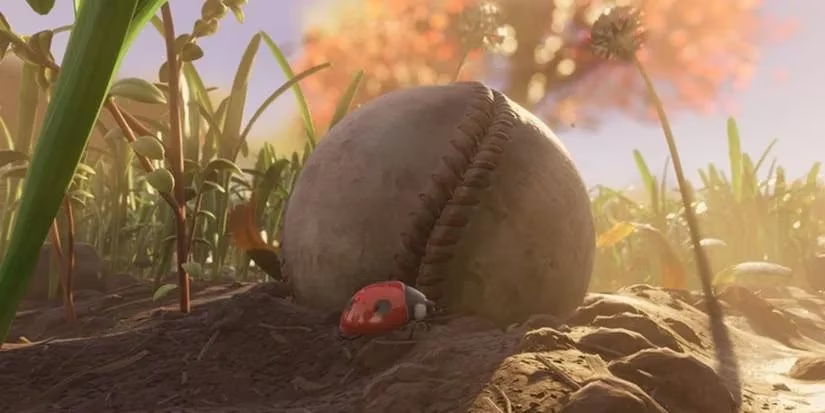
I have a confession: survival crafting games usually make my spirit wilt. But Grounded was the exception, a tiny miracle in a vast backyard. The premise, channeling that childhood fantasy of being shrunk, was executed with such wonder and environmental storytelling that every dew-covered grass blade held a tale. I stubbornly refused to build a permanent base, flitting from objective to objective like a determined insect myself, and the game never punished me for it. The combat was exploitable, the resource-gathering a chore at times, but the world was so alive – the haunting hum of a bee, the silhouette of a spider against the moon – that I wanted to stay. Is it not rare when a game changes how you see an entire genre? For me, Grounded made the ordinary extraordinary.
5 Neon White
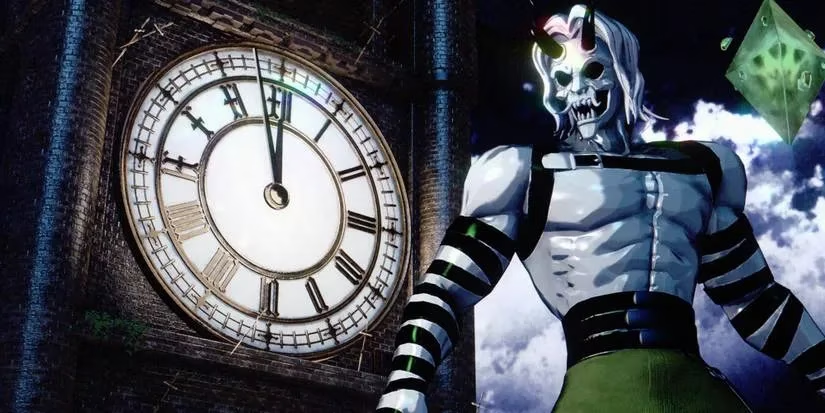
Speed can be a kind of meditation. Neon White was a prayer recited at a breakneck pace. As an amnesiac sinner tasked with cleansing a neon-drenched Heaven, I dashed, shot, and discarded weapon-cards in a flow state that felt almost sublime. But beneath the bleeding-edge movement mechanics, it was the game’s soul that hooked me. A cast of quirky, forgotten souls, each with ties to your past life, turned what could have been a sterile speedrunner’s challenge into a charming, often hilarious visual novel between levels. Was it a parody of anime tropes? A love letter to the arcade? The nonsensical banter, the pop-culture winks, the oddly touching moments of reconnection – they transformed each second-shaved time into a memory. Go fast, it said, but don’t forget why you’re running.
4 Citizen Sleeper
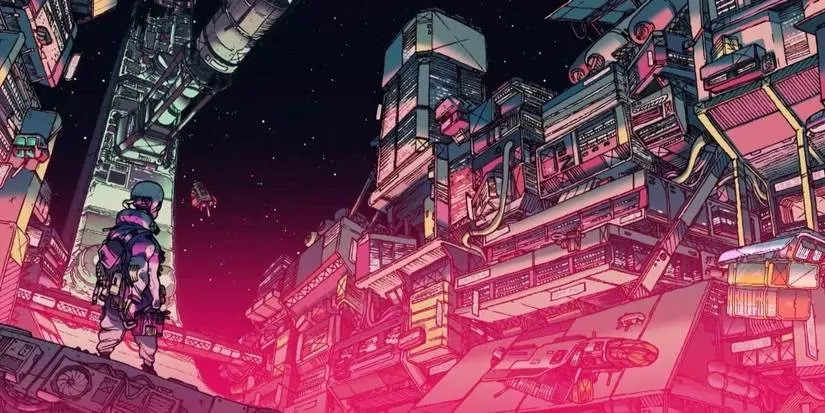
In the cold silence of a space station called The Eye, I found a warmth that many blockbusters lack. Citizen Sleeper was a snap purchase that became a profound experience, a dice-driven narrative game about a mind uploaded into a decaying robotic body, fleeing a megacorporation’s grip. It mirrored our own gig economy in chilling, beautiful ways: the precariousness, the isolation, the fleeting acts of solidarity. Every dice roll was a small piece of survival, every character’s story a thread in a tapestry of hope and despair. I drifted through menus as if through sensor-lit corridors, meeting souls who were broken, kind, and desperately human. Can a game about being a replaceable cog feel so deeply personal? Citizen Sleeper answered with a quiet, devastating “yes,” and I’ve carried its weight ever since.
3 Elden Ring
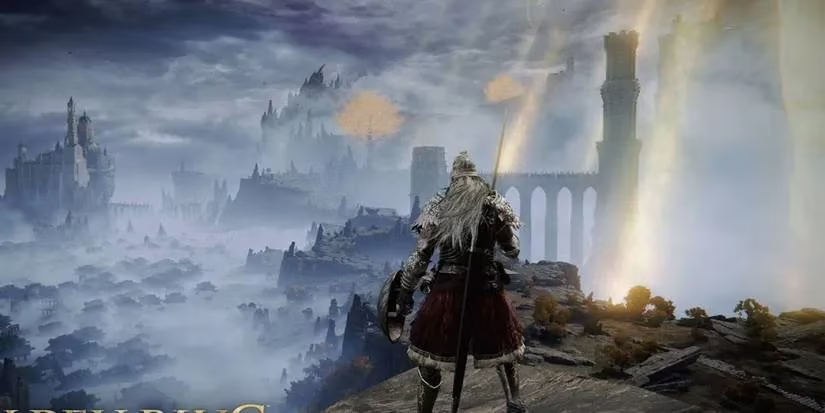
There are words that have already been written, mountains of them, about Elden Ring. What is left to say? Every stone turned revealed a new mystery, every defeat a lesson carved into the bone. The Lands Between were not just a map; they were a mood, a myth whispered on shattered lips. I was a wandering Tarnished, but I was every Tarnished who ever raised a sword in that bleak, majestic world. It’s not that Elden Ring was simply vast; it was dense with the kind of discovery that makes you forget time. Is its legend already set in gaming history? Without a doubt. And so, I place it not at the peak, but as a foundation of shared awe – a collective dream we all had in 2022, and one I still feel behind my eyelids.
2 Marvel’s Midnight Suns
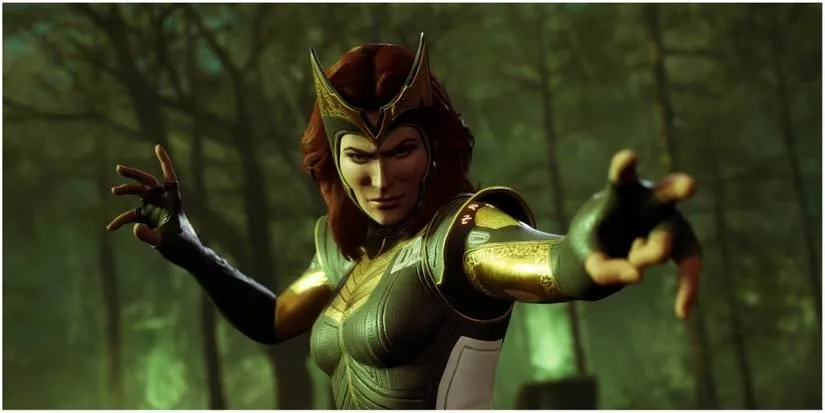
Obsession often strikes when you least expect it. I picked up Midnight Suns in a year-end rush, thinking I’d sample it for this very list. Instead, I fell headlong into a card-casting, friendship-building marvel that redefined how I saw iconic heroes. The card mechanic made every battle a unique puzzle, a hand of fate I had to play with tactical verve. But the true sorcery was in the Abbey, where I walked alongside Iron Man, Blade, and Magik as they shared fears, made jokes, and became human. The writing dared to go beyond movie tropes, crafting intimate moments that felt earned and real. Could a strategy game make me care about its cast this much? Midnight Suns lit a midnight flame I haven’t extinguished since.
1 Pentiment
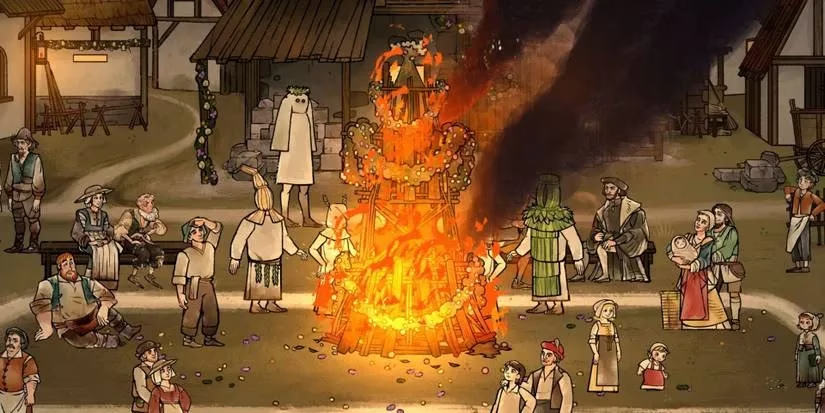
And so we arrive at the masterpiece. Pentiment is not just my game of 2022; it is, in my heart, one of the all-time greats. To walk as Andreas Maler through sixteenth-century Bavaria, caught in a web of murder, faith, and social upheaval, was to touch something real. Obsidian crafted a narrative that bled authenticity – from the illuminated manuscript style to the nuanced debates about Lutheran critique among Benedictine monks. How often does a game invite you to discuss theology and then let those conversations ripple into the streets? Every choice, every dialogue tree, felt like a brushstroke on a living canvas. This is a game for lovers of history, of mystery, of humanity in all its flawed glory. And if you have no interest in those things? Play it anyway. It is that good. Pentiment is a testament to what this medium can be: a quiet, relentless, soul-shaking work of art.
What will the next years bring? I cannot say. But these ten titles, these digital landscapes, have become part of my inner geography. They are proof that in games, as in life, the brightest lights are often found not in the loudest cathedrals, but in the flicker of a candle, the turn of a card, the glance of a bear.