
The musical identity of FromSoftware’s Elden Ring has inspired a remarkable act of fan creativity, as composer and content creator Alex Moukala presents a single video in which the game’s iconic main theme is transformed across fifteen distinct genres. Rather than settling for a straightforward cover, Moukala assembles a flowing mashup that demonstrates how malleable and powerful the title screen composition truly is. The project stands as evidence of the deep connection players continue to feel with the Lands Between, long after the game’s initial launch.
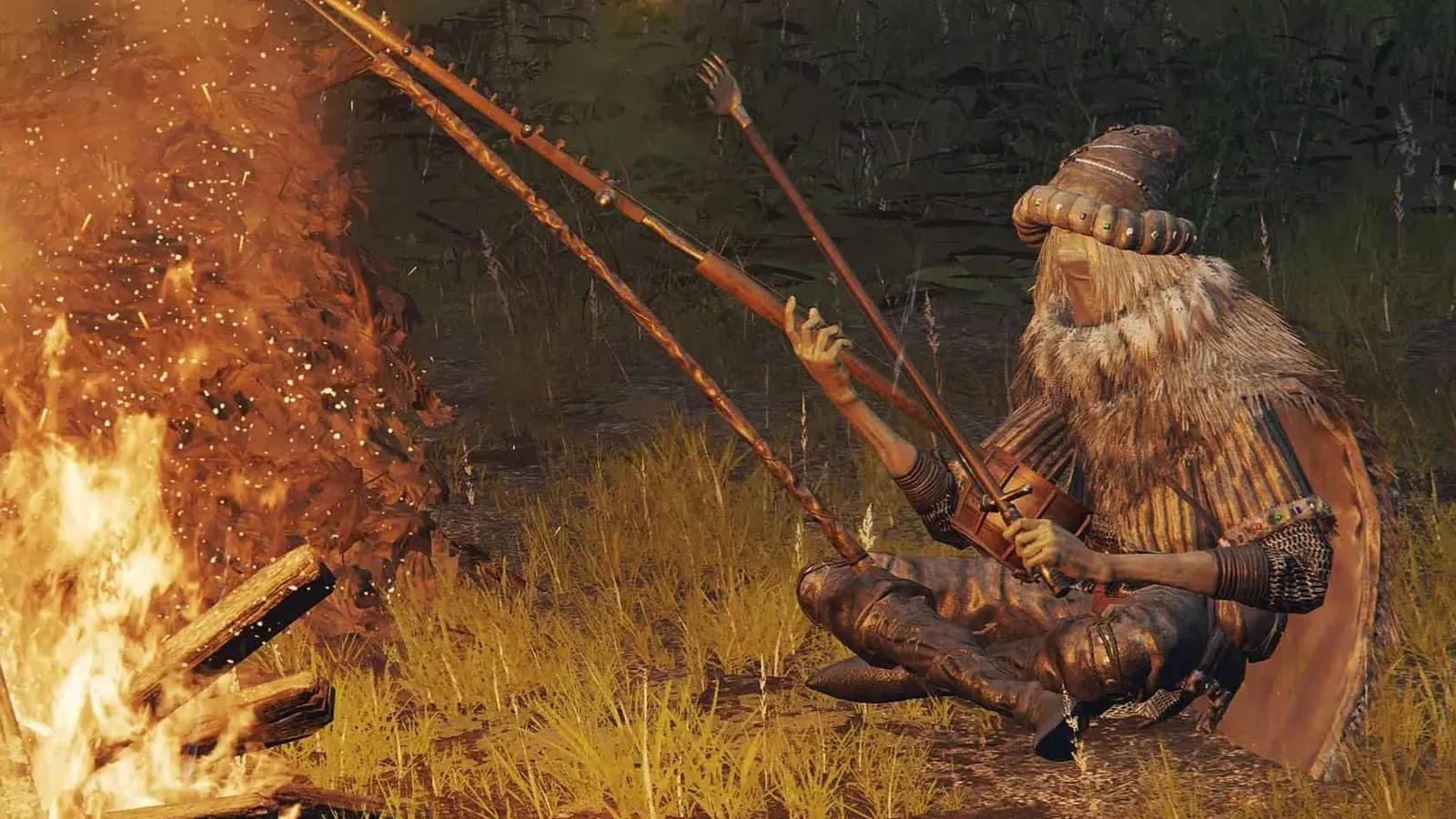
When Elden Ring first arrived in February 2022, its reception was immediate and overwhelmingly positive. Critics and players praised the open-world structure, the demanding combat, and the layered storytelling that FromSoftware had refined across earlier Soulslike projects. New systems such as Spirit Summoning, Ashes of War, and mounted traversal gave the experience a distinctive rhythm, allowing each journey toward the Elden Throne to feel personal. That broad appeal produced a fan base with considerable artistic range, and many tributes soon followed in the form of paintings, animations, maps, and musical reinterpretations.
Moukala’s version focuses specifically on the theme heard on the game’s title screen. The video begins with the warm plucked notes of a Spanish guitar, then shifts quickly into the polished pulse of NU-Disco. From there, the arrangement moves into symphonic metal, where distorted guitar layers and dramatic orchestration bring a heavier tone to the melody. The transitions do not feel forced; each segment is carefully connected so that the change in genre becomes part of a larger musical narrative rather than a jarring cut.
Among the other segments, the lo-fi interpretation slows the theme into a relaxed, atmospheric groove, while the dark synth version leans into brooding electronic textures that mirror the game’s more oppressive regions. Genre number seven, described as the Movie Trailer version, delivers one of the most intense moments in the entire video. Its rising percussion and heroic brass could easily accompany a modern blockbuster trailer, suggesting that the Elden Ring theme has a versatility that reaches well beyond the fantasy action genre.
A closer look at the highlighted styles reveals how different production choices reshape the same melodic core:
| 🎸 Genre | 🎧 Character |
|---|---|
| Spanish Guitar | Delicate, organic opening with intimate fingerpicking |
| NU-Disco | Bright, rhythmic energy with a danceable groove |
| Symphonic Metal | Orchestral weight combined with aggressive guitar work |
| Lo-fi | Softly filtered beats and a mellow, late-night atmosphere |
| Dark Synth | Tense electronic layers and moody, cinematic suspense |
| Movie Trailer | Explosive percussion and rising heroic intensity |
The transitions are not merely technical experiments; they also carry emotional shifts. The opening Spanish guitar feels intimate and quest-like, while the dark synth segment evokes the claustrophobic halls of a hidden dungeon. The movie trailer segment, by contrast, recasts the theme as a call to battle, complete with soaring strings and pulsing percussion.
The full video includes more transitions than those listed above, and the cumulative effect is a celebration of both composition and arrangement. What stands out is not only the technical skill involved, but also the affection for the source material. Recreating a theme in so many styles requires an understanding of melody, harmony, rhythm, and production that goes far beyond simply replaying the notes. Moukala’s work shows how a strong main theme can survive dramatic changes in tempo, instrumentation, and mood while remaining instantly recognizable.
This kind of tribute also reflects the enduring place Elden Ring occupies in gaming culture. Months after release, fan art and custom projects continued to appear, and the game’s soundtrack became a frequent subject for remixes and covers. In the years since, the community has only grown more ambitious, with creators using newer tools to revisit the Lands Between and reinterpret its music. Even in 2026, the main theme remains one of the most recognizable pieces from the modern FromSoftware era, and fan-made arrangements continue to circulate across social platforms.
Musical tributes like this serve as a reminder that a game’s identity often lives through its sound as much as its visuals or mechanics. The title screen theme carries a mood of mystery, grandeur, and melancholy that players associate with their first steps into Limgrave and beyond. By placing that theme inside such contrasting genres, Moukala highlights the strength of the original composition while also giving listeners a fresh way to appreciate it.
The response from the community illustrates how shared creative work can extend a game’s cultural footprint. Fans who discover the mashup are often inspired to explore the soundtrack more closely or attempt their own covers. In that way, a single tribute can become part of a much larger conversation about music, memory, and the worlds that players choose to inhabit. The ongoing popularity of such tributes reinforces the idea that Elden Ring does not exist only as a product to be completed, but as an artistic world to be interpreted. Musicians, illustrators, and modders have all found ways to leave their mark, and each new work invites others to return to the Lands Between with fresh eyes and ears. Elden Ring has already produced a lasting legacy, and efforts such as this 15-style rendition ensure that its musical themes will continue to be explored, celebrated, and reinvented for years to come.