
As a former battle royale addict, I couldn't help but draw parallels between the white-knuckle final circles of a Fortnite match and the desperate sprints to a Site of Grace as Nightreign's storm closes in. But make no mistake: Elden Ring Nightreign is not a battle royale. There's no PvP, no shrinking playzone for the sake of competition—just pure, unadulterated co-op chaos. After four hours with the stress test build back in 2025, I was ecstatic. Now, in 2026, with the full game released and countless runs under my belt, I can confirm: Nightreign doesn't just avoid tarnishing the Elden Ring name—it forges its own legendary path.
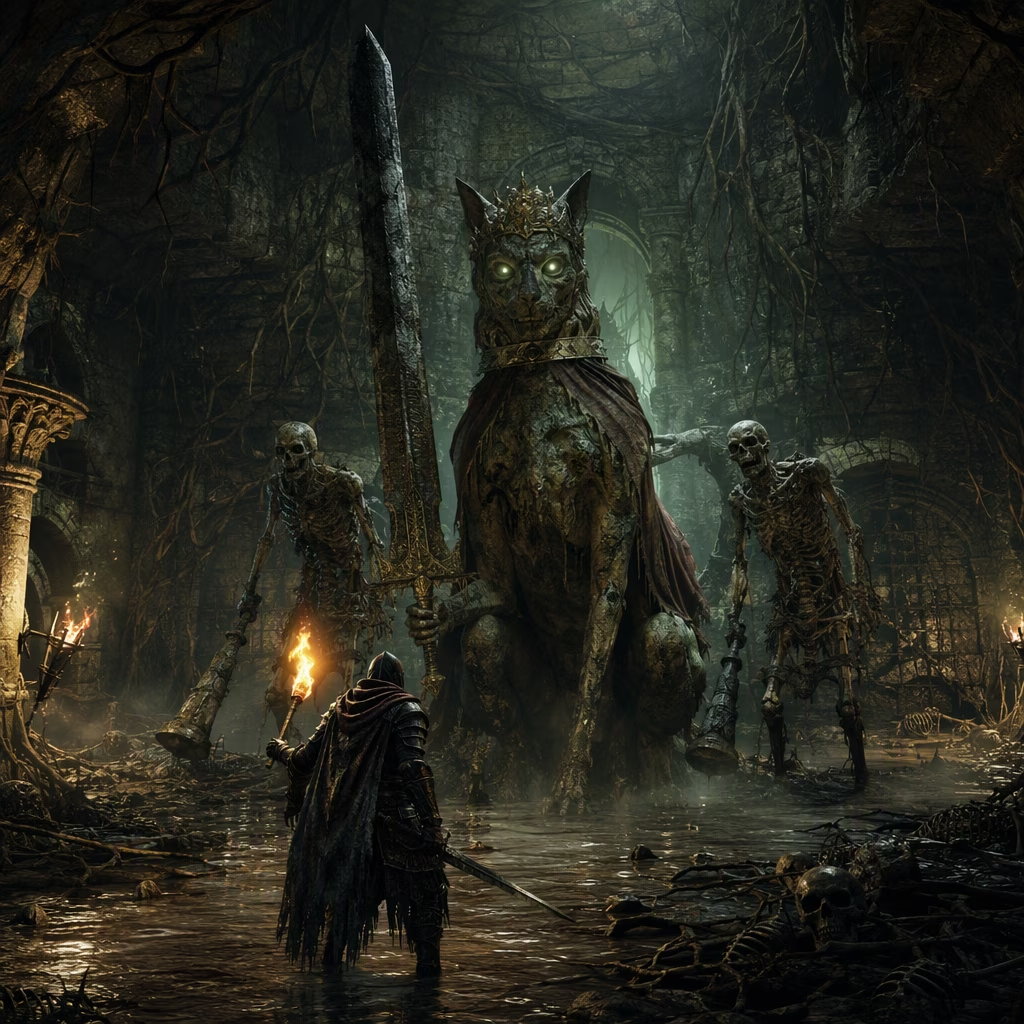
A Roguelike Heart Beneath the Elden Ring Skin
When you drop into Limveld (not Limgrave) with two squadmates, you start from nothing. The map is littered with points of interest: churches for extra flask charges, castles for mini-bosses dropping powerful gear, and rises with simple puzzles. The ever-closing circle trains your brain to keep moving. Sound familiar? It's the battle royale loop, but without the toxicity. Instead, you're racing to level up, snag loot, and build a character powerful enough to survive the night bosses.
Each run lasts 30-45 minutes, structured as a three-day cycle—though it's really five phases: day one, night one, day two, night two, and the final boss. You begin at level one with basic gear, but leveling is as quick as a button press. Each class has a predetermined stat upgrade path, so when you rest at a Site of Grace, you just hit Confirm. Three or four taps later, you're significantly stronger. No menus, no fuss—perfect for the breakneck pace.
Classes: Four at Stress Test, Eight at Launch
In the stress test, we had four classes: the all-arounder Wylder, the speedy glass-cannon Duchess, the tanky Guardian, and the magic-wielding Recluse. The full game now offers eight, but those original four remain iconic. My favorite? The Duchess. Her skill repeats the last 1.5 seconds of damage an enemy took—from anyone, not just you—with a short cooldown. Wait for a huge health spike, trigger it, and watch the boss melt.
| Class | Role | Unique Skill | Ultimate |
|---|---|---|---|
| Wylder | All-rounder | Blast attack | High damage burst |
| Duchess | Speed/Glass cannon | Damage repeat (1.5s) | Swift dodges, nimble |
| Guardian | Tank | Large shield (negates damage, revives) | Protective barrier |
| Recluse | Mage | Curse enemy (HP/FP bonus for attackers) | Powerful spells, FP hungry |
Recluse is incredibly powerful but runs out of FP often—and there are no FP flasks in Nightreign. She's a high-risk, high-reward pick. Team composition matters, so talk with your squad before diving in.
Speed Is the Name of the Game
Nightreign moves fast—much faster than the original Elden Ring. Sprinting is mapped to clicking the left stick, and it's about twice as fast. Fall damage? None. You can parkour up walls, leap off cliffs, and use Spiritsprings to traverse. During the day phases, you'll hunt runes and gear, but the real thrill comes from the night bosses. They're the skill check. My team ranged from decimating the night-one boss to barely scraping by. If you wipe during a night boss, it's game over. During the day, you just drop runes and respawn at the nearest Site of Grace—lost time is the real penalty.
Day two brings random invasions from Margit, The Fell Omen, who chases you until he dies or wipes your party. Then night two hits, and it's brutal. I've faced the Centipede Demon (tough but manageable) and three Sentinel Knights (absolute nightmare). The Knights require extreme coordination—focus fire one at a time, but it's a battle of attrition. In six or seven full runs, my team only got past night two once. Once? That's brutal.
Build Crafting: Roguelike Synergy
There's no armor in Nightreign—only six weapon slots and two amulet slots. Everything on your person gives buffs, even if you're not actively using it. Found a Reduvia Dagger with high bleed? Start a bleed build. Then pick up a spear that increases status effect build-up—you won't wield it, but you'll still benefit. It's a roguelike dream: sometimes synergies align and you melt mobs; other times you get poison weapons when you wanted FP regen. Bummer.
Boss loot often offers stat upgrades or modifiers: a 10% physical damage boost (boring but useful), or a passive that drops a poise-breaking lightning strike every time you dodge (amazing). You can craft absurdly powerful combinations.
The Final Stretch and Progression
Day three doesn't exist. Instead, you spend leftover runes on levels or consumables, then face the final boss. Win or lose, you earn relics—persistent buffs for future runs. Better performance means better relics, from simple stat boosts to build-defining modifiers. In 2026, the full game has expanded this progression system, but the core loop remains addictive.
Elden Ring Nightreign is a lot of fun. Pulling off a victory by the skin of your teeth feels like taking down Malenia for the first time. The moment a round ends, I'm already queueing for the next. And that cheer my team let out when we finally beat that day-three boss? It reminds me why I love souls-likes. In its stress test form, it felt content-lite, but the full release has fleshed it out. It's been days since my last run, and still, it's all I think about. I absolutely cannot wait to jump back in.
So, is Nightreign a battle royale? No. But does it capture that same addictive, heart-pounding loop? Absolutely. And in 2026, that's more than enough.