
In the ever-evolving tapestry of digital realms, where graphical fidelity ascends with each passing year, certain warriors of silicon from yesteryear stand as steadfast sentinels. The AMD Radeon RX 6700 XT and its sibling, the 6750 XT, once heralded as champions of 1440p, now face the crucible of FromSoftware's latest expansion, Elden Ring: Nightreign. Though a couple of generations have passed since their debut, these GPUs, like seasoned knights with slightly dulled armor, retain the heart to venture into the Lands Between's new shadows. Their journey is no longer one of unchallenged supremacy but of careful optimization—a delicate dance between visual splendor and fluid performance, where every setting tweak is a whispered pact with the hardware's enduring spirit.
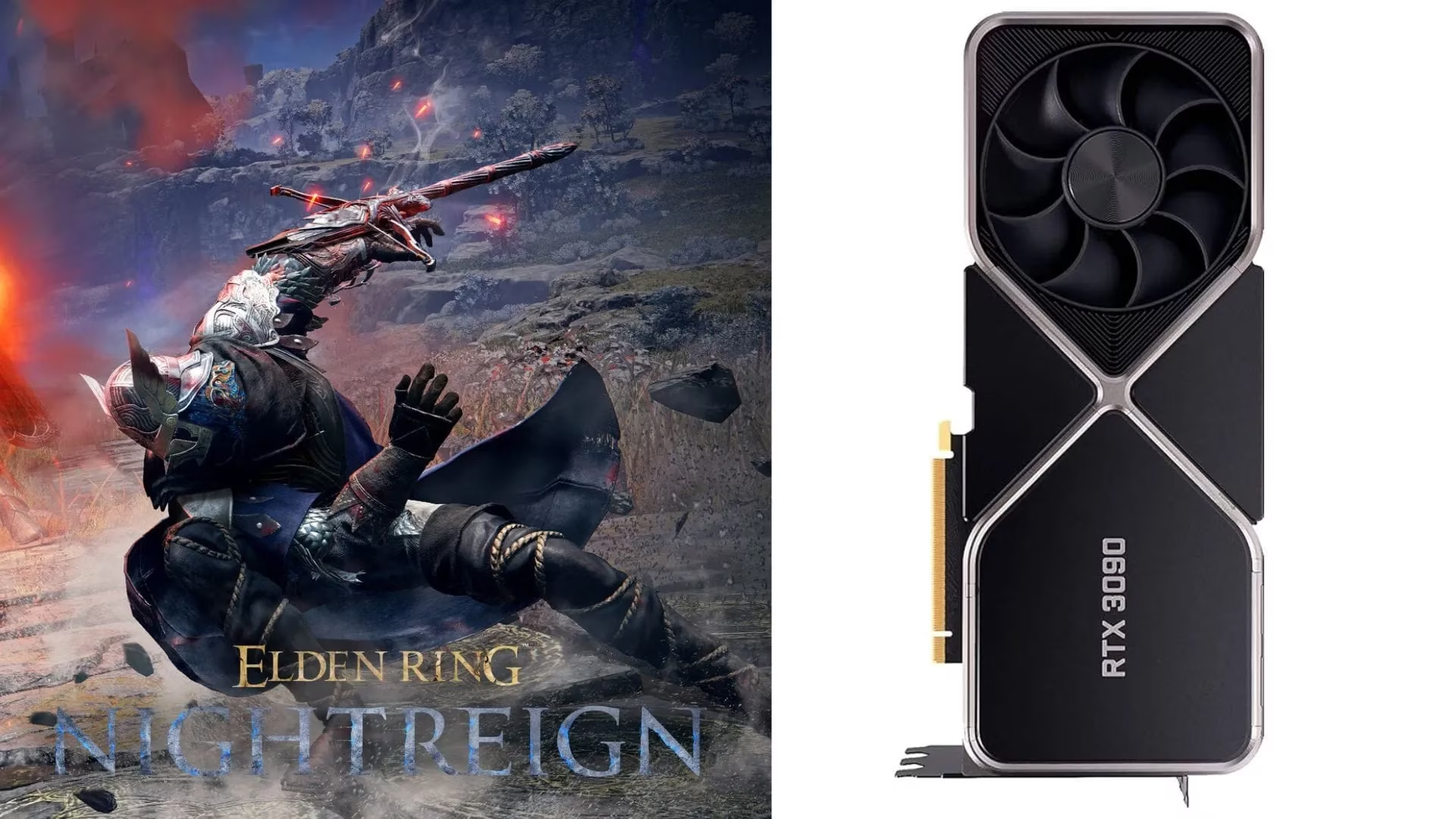
The RX 6700 XT, born for the crisp vistas of 1440p, approaches Nightreign not as a conqueror but as a tactician. To achieve the hallowed 60 frames per second—the game's locked cadence, a rhythmic heartbeat for combat—one must forsake the siren song of Ultra presets. The path lies in a curated blend of High and Medium settings, a palette where texture detail and anti-aliasing remain proud banners, while lighting and shader complexities are tempered like steel in a controlled forge. The resulting experience is not one of compromise, but of harmony; the haunting beauty of the expansion's new biomes unfolds not as a static painting, but as a living, breathing diorama. The GPU's performance in this configuration is akin to a well-worn, yet perfectly balanced, longbow—it may not have the draw weight of the latest models, but in skilled hands, its arrows fly true and steady.
🛡️ The RX 6700 XT's Optimal Configuration for Nightreign
To embark on this optimized pilgrimage, follow these settings. Think of them not as limitations, but as the incantations required to summon the GPU's latent power.
| Setting Category | Recommended Value | Performance Impact |
|---|---|---|
| Display | Fullscreen, Native, 2560x1440 | ⚡ Critical for stability |
| Core Quality | Texture: High, Antialiasing: High | 🎨 High visual payoff, low cost |
| Atmosphere | SSAO: High, Depth of Field: High, Motion Blur: High | 🌫️ Enhances depth and cinematic feel |
| World Lighting | Shadow: High, Volumetric: High, Global Illumination: High | 🔦 Defines the mood; keep high where possible |
| Strategic Adjustments | Lighting: Medium, Effects: Medium, Shader: Medium | ⚖️ Key areas for gaining performance headroom |
| Environment | Reflection: High, Water: High, Grass: High | 🌿 Maintains world immersion and detail |
Ensure "Auto-detect best rendering settings" is turned Off, for the game's automated eye may not see the unique strengths of this aging architecture.
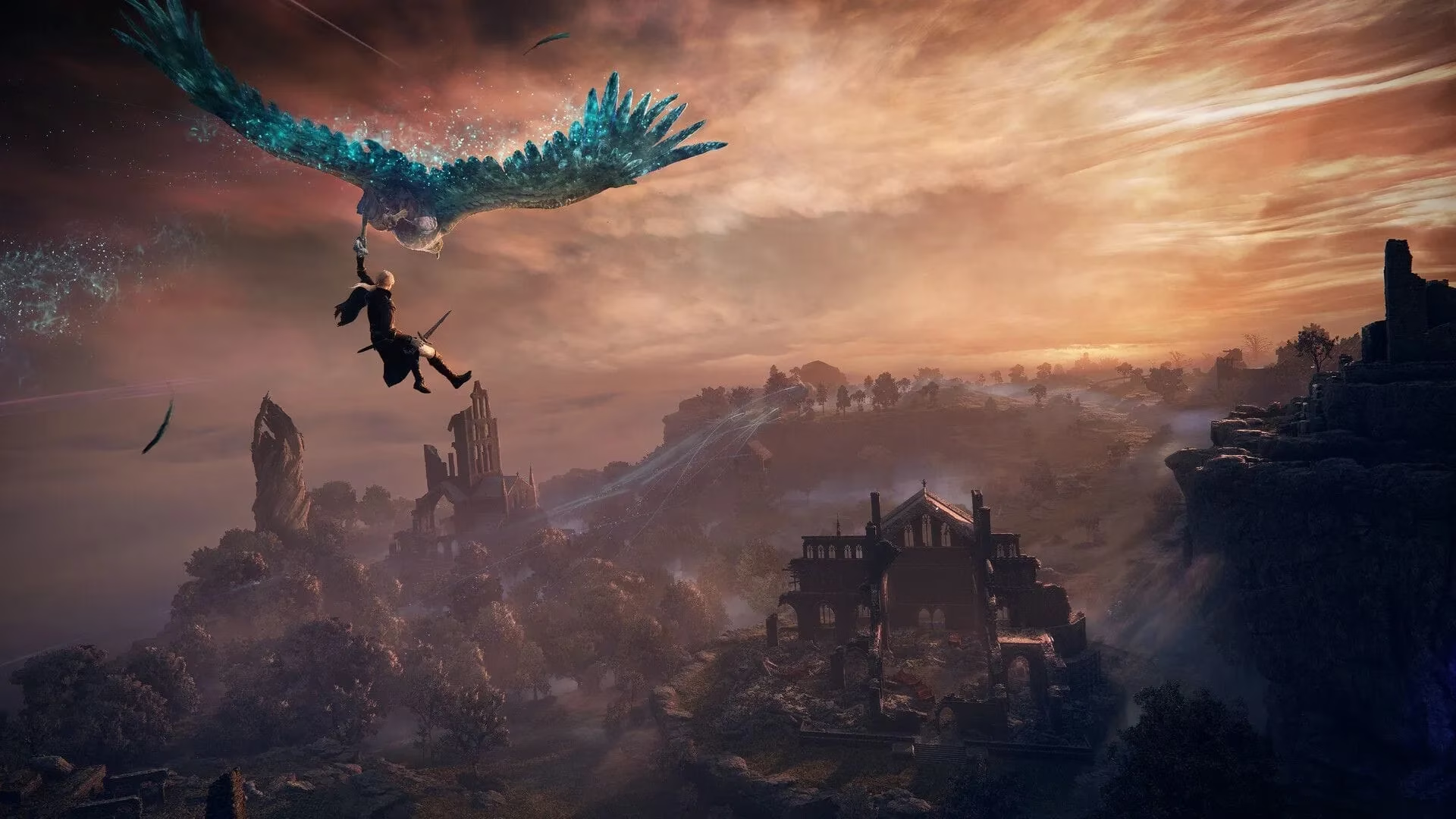
For the Radeon RX 6750 XT, the quest is strikingly similar. This card is essentially the 6700 XT's echo, amplified by a gentle overclock—a swift runner compared to a steady jogger, but both traversing the same rugged path. In the context of Nightreign's 60 FPS cap, the performance delta between them shrinks to the significance of a single dewdrop on a morning leaf. Therefore, the same symphonic blend of High and Medium settings applies. Pushing every slider to its maximum would be like asking a master calligrapher to write with a brush made of stone; the intent is there, but the tool's fundamental nature limits the flourish. The 6750 XT, with this guide, delivers a consistent and engaging 1440p experience, where the dread of a new Night's Cavalry charge is felt in the gut, not witnessed through a stuttering pane of glass.
⚔️ United in Configuration: The Twin GPUs' Shared Path
The detailed incantation for both cards is as follows:
-
Screen Mode: Fullscreen
-
Display Output: Native display
-
Limit Mouse Movement: On
-
Resolution: 2560 x 1440
-
Auto-detect best rendering settings: Off
Quality Settings Table:
| Setting | Recommended Value |
|---|---|
| Texture Quality | High |
| Antialiasing Quality | High |
| SSAO | High |
| Depth of Field | High |
| Motion Blur | High |
| Shadow Quality | High |
| Lighting Quality | Medium |
| Effects Quality | Medium |
| Volumetric Lighting Quality | High |
| Reflection Quality | High |
| Water Surface Quality | High |
| Shader Quality | Medium |
| Global Illumination Quality | High |
| Grass Quality | High |
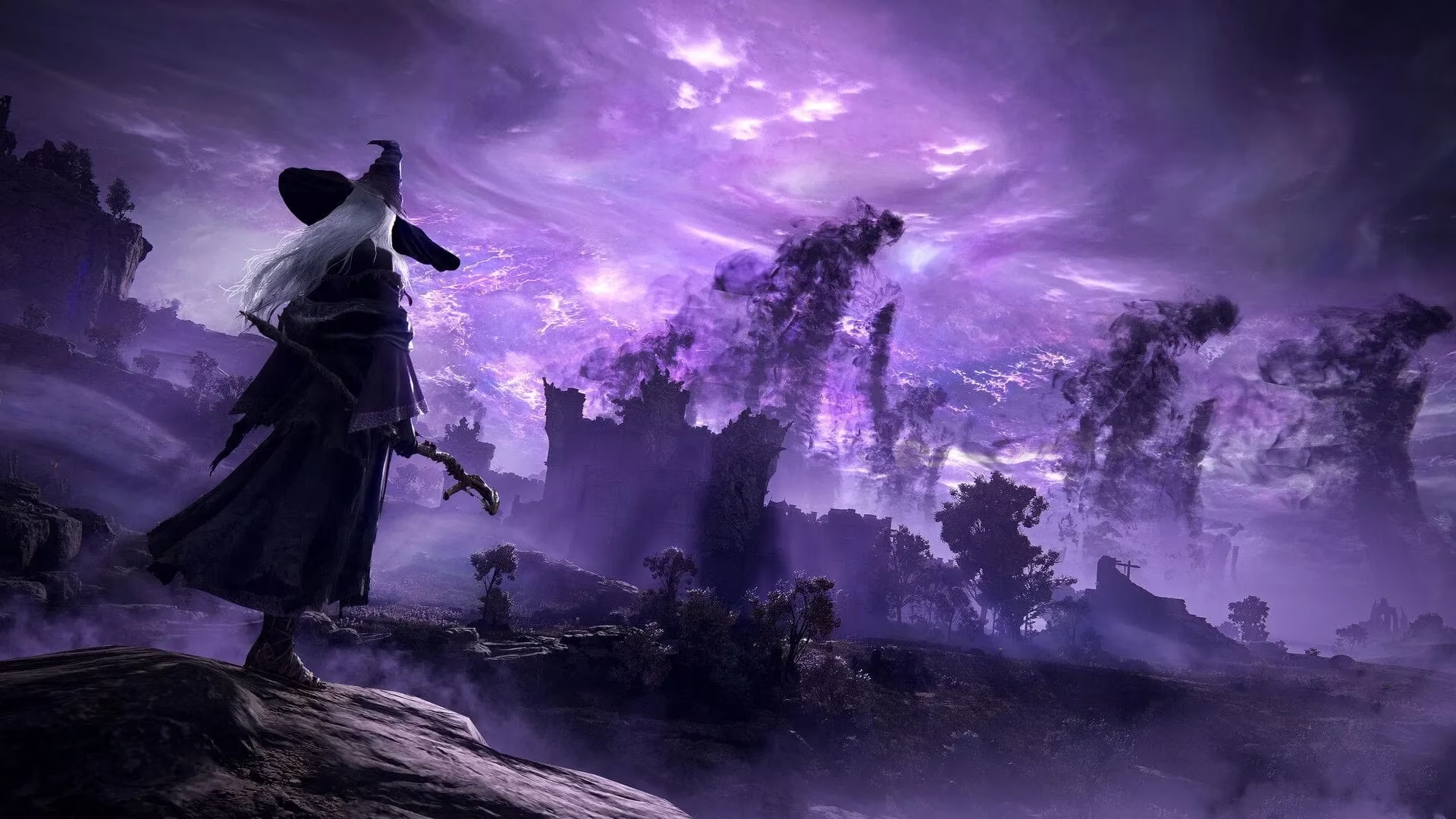
As the year 2026 unfolds, the reality for these venerable Radeon cards is clear: the era of effortless ultra-settings dominance has passed, fading like the last golden light before the Nightreign. They now inhabit a space of intelligent curation. This guide is not a eulogy, but a grimoire—a testament to their enduring value. By applying these settings, Elden Ring: Nightreign runs with a comfortable and stable grace at 1440p, proving that these GPUs are far from obsolete. They are like ancient, gnarled trees in a storm; they may bend, but their roots in solid performance run deep. However, for titles yet to come, more demanding than the shadowed lands of this expansion, the concessions may need to grow deeper. The journey forward will require further dialing down of graphical options, a gradual dimming of certain lights to keep the fundamental flame of 60 FPS alive. For now, though, with the right incantations spoken, these silicon veterans can still weave a compelling and beautiful tale in one of gaming's most demanding new chapters.
Data referenced from SteamDB helps frame how performance-tuning guides like the RX 6700 XT/6750 XT 1440p “High/Medium” mix matter in practice: when a big expansion drops, concurrent-player spikes and rapid patch cadence can amplify the impact of small stability gains, making locked 60 FPS settings work feel more valuable than chasing Ultra visuals that risk stutter during peak-load moments.