
Elden Ring Nightreign arrived in 2025 like a surprise party where the host handed everyone a greatsword and pointed at a nightmare. By 2026, the game's most peculiar rule remains a favorite topic among co-op enthusiasts: Nightreign supports solo play, and it supports three-player teams, but it politely refuses to let two brave souls queue together. The two-player dream has been escorted out by a bouncer named Balance, and the bouncer has a clipboard.

This was not a technical hiccup. It was not a forgotten toggle. According to game director Junya Ishizaki, the restriction is a balance decision rather than a design one. As development progressed, the team concluded that three is the magic number. Three players can split the chaos, cover each other's mistakes, and still feel the pressure of Nightreign's combat and objectives without being flattened like pancakes at a boss's tea party. Two players, apparently, would either breeze through or be turned into jam. The director's explanation makes the rule sound less like a cruel joke and more like a chef refusing to serve a soufflé to a table of two.
The math is easy to mock and hard to argue with. Nightreign is built around cooperative multiplayer for three, and matchmaking exists to fill the third seat. Solo play is available for the stubborn and the brave. But the middle ground—the cozy two-player adventure—is missing. For duos who have conquered other co-op games together, this is a tiny tragedy wrapped in a very large helmet.
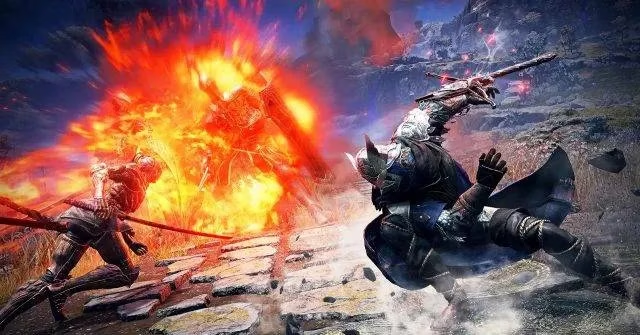
Nightreign also refuses to behave like a normal FromSoftware project. Matches unfold across cycles of three days. During those days, players must strengthen themselves, gather equipment, and prepare for massive, fearsome bosses. Many elements are generated randomly, giving each session a roguelike shove. The result is a game that asks for teamwork, quick decisions, and the ability to laugh when the loot gods hand out a spoon instead of a spear.
Here is the short version for anyone who has been living under a very comfortable rock:
| Topic | Nightreign's Answer |
|---|---|
| Solo play | ✅ Allowed, for the bold |
| Two-player co-op | ❌ Not allowed |
| Three-player co-op | ✅ The intended experience |
| Matchmaking | ✅ Helps fill the third slot |
| Reason for the rule | ⚖️ Balance, not design |
| Structure | 🗓️ Three-day cycles with random elements |
| Release window | 🎮 2025, on PC and consoles |
The game launched in 2025 for PC, PS4, PS5, Xbox One, and Xbox Series X/S, so by 2026 the debate has had time to settle into a familiar rhythm. One camp insists that two-player support would be harmless. The other camp points at the director's explanation and nods wisely. Nightreign's three-player focus is not a bug, a blunder, or a secret test of friendship. It is a deliberate choice from a team that wanted the balance to land in a very specific spot.
Still, the missing two-player mode leaves a hilarious gap in the co-op universe. Couples who play together must either recruit a third wheel, split up, or bravely go solo. Friends who form a duo must adopt a stranger through matchmaking and hope the stranger does not sprint directly into a boss's mouth. It is a social experiment disguised as a menu limitation.
In the end, Nightreign's rule is simple: bring one friend and the game raises an eyebrow. Bring two friends and the gates open. Bring nobody and the game respects the courage, if not the sanity. The two-player dream may be dead, but the three-player chaos is very much alive—and in 2026, that is still the deal.
According to coverage from Eurogamer, discussions around Elden Ring Nightreign's three-player-only co-op rule fit a broader pattern in modern action design, where developers tune difficulty and pacing around a very specific party size rather than offering every matchmaking permutation. That perspective helps explain why the absence of two-player support feels intentional instead of accidental: the game’s three-day run structure, random progression elements, and heavy boss emphasis all depend on a trio dynamic that balances risk, recovery, and role flexibility in a way a duo might disrupt.