
The long-awaited ray tracing update for Elden Ring arrived in 2023, but its implementation left many players questioning its value. Weighing in at a substantial 5 GB, the patch promised enhanced visual fidelity through real-time ray tracing technology. However, for the vast majority of players, the difference between having RTX enabled or disabled was nearly imperceptible. What was unmistakable, however, was the significant performance penalty it imposed. In a game where split-second reactions and a stable frame rate are the difference between glorious victory and crushing defeat, this performance hit was a critical issue. Consequently, most Tarnished adventurers—those without the sheer graphical horsepower of an RTX 4080 or similar top-tier hardware—opted to leave the feature disabled, hoping for future optimizations from FromSoftware and Nvidia.
The Unintended Spectacle of a Glitch
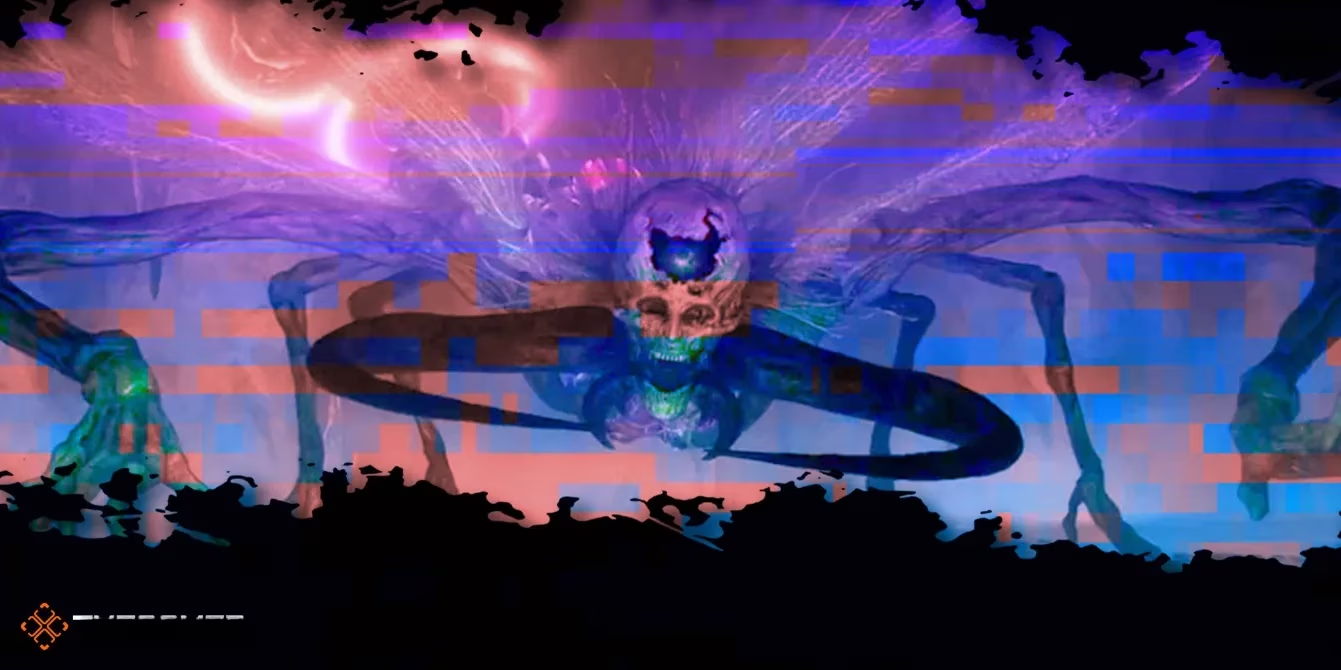
But what happens when a technical feature doesn't work as intended? One intrepid player, Mysterious_Cause5298 on the Elden Ring subreddit, decided to keep ray tracing active during a climactic battle against the cosmic horror Astel, Naturalborn of the Void. The result was not the subtle shadow and reflection enhancement that was advertised, but a dramatic, game-altering visual bug that transformed the encounter into something entirely new. The fight began normally, but the moment Astel performed its teleportation ability, the arena was engulfed in a creeping, all-pervading darkness. The boss itself was outlined in inky black, and its devastating laser attack projected a vivid, neon-purple outline reminiscent of the digital landscapes from the film Tron.
This glitch, while clearly a bug, sparked a fascinating discussion within the community. Could a graphical error accidentally create a more compelling and thematic visual experience? The top comment on the post noted the Tron aesthetic, but also pointed out that this unintended effect represented the most noticeable visual change players had seen from the ray tracing options. Mysterious_Cause5298 themselves reflected on the experience, stating, "It feels a lot more like void magic fuckery when the world actually breaks. Hard to tell what is happening in the fight though." This sentiment captures the duality of the glitch: it was visually epic and thematically fitting for a void-born creature, yet it came at the cost of gameplay clarity. Is an awe-inspiring bug preferable to a barely noticeable, performance-hungry "feature"?
The Legacy of Community Legends
While the ray tracing update presented technical challenges, the heart of Elden Ring has always been its community. The tradition of player-created heroes continued to thrive. Following the legendary deeds of Let Me Solo Her, the master who dedicated himself to helping others defeat the notoriously difficult boss Malenia, a new champion arose: LetMeSoloThem. This anonymous warrior expanded the mission, offering aid not just for a single boss, but for players struggling against the game's final challenge—the Elden Beast.
LetMeSoloThem's journey was one of pure, selfless dedication. Earlier in 2023, they achieved an initial, staggering goal of assisting fellow Tarnished in defeating the Elden Beast 3,000 times. Not content to rest, they immediately set a new, even more ambitious target: 5,000 victories. This commitment highlights a core pillar of the Souls-like experience: shared struggle and communal triumph. Why do these solitary heroes spend hundreds of hours helping strangers? The answer lies in the unique culture of perseverance and support that defines the player base.
A Look at Performance vs. Aesthetics
The Elden Ring ray tracing saga serves as a modern case study in the balance between graphical advancement and functional gameplay. Here’s a breakdown of the key trade-offs players faced:
| Aspect | With Ray Tracing (Intended) | With Ray Tracing (Bug - Astel Fight) | Without Ray Tracing |
|---|---|---|---|
| Visual Fidelity | Minimal perceived improvement in shadows/reflections | Dramatic, thematic, but buggy transformation | Stable, intended artistic vision |
| Performance | Significant frame rate drop, unstable for combat | Likely severe performance issues alongside glitches | Consistent, reliable frame rate |
| Gameplay Impact | Negative (due to performance loss) | Mixed (epic visuals vs. impaired clarity) | Positive (optimal for reaction-based combat) |
| Community Verdict (2023-2026) | Largely rejected for practical play | Fascinating novelty, not for serious attempts | Overwhelmingly preferred standard |
The community's practical response has shaped the game's evolution. In the years since the update, optimization patches have been released, but the core lesson remains: in an action RPG as demanding as Elden Ring, buttery-smooth performance will almost always trump marginal graphical upgrades. The Astel glitch, while a memorable moment, was an exception that proved the rule—it was celebrated as a bizarre spectacle, not as the desired standard.
The Enduring Spirit of the Lands Between
As of 2026, Elden Ring's legacy is multifaceted. It is remembered for its breathtaking world, punishing bosses, and deep lore. The ray tracing update is a footnote, a curious experiment in visual technology that ultimately reinforced the importance of performance. Conversely, the stories of community heroes like Let Me Solo Her and LetMeSoloThem have become legendary, embodying the cooperative spirit that persists long after a game's launch. These players didn't wait for a patch to improve the game; they became the patch, offering their own skill as a remedy for frustration. Their dedication raises a question: what is more valuable to a game's lifespan, a new graphical feature or a vibrant, supportive community? For the Tarnished of the Lands Between, the answer has always been clear. The true magic of Elden Ring isn't found in ray-traced reflections, but in the shared moments of struggle and victory, whether against a glitch-transformed Astel or the daunting Elden Beast, with a friendly phantom by your side.