
In the vast and often melancholic domain of Elden Ring, few presences cut through the gloom as memorably as Patches, the opportunistic rogue whose sly schemes and nasal, high-pitched delivery have become a cherished tradition across FromSoftware’s Soulsborne catalog. The reason his appearance feels so familiar lies not only in his recurring role but in the constant presence of his voice actor, William Vanderpuye. With the exception of Dark Souls 2, where the character was omitted entirely, Vanderpuye has lent his voice to Patches in every major Soulsborne title. This uninterrupted partnership has elevated both character and performer into the most recurring character-actor duo in the studio’s history.
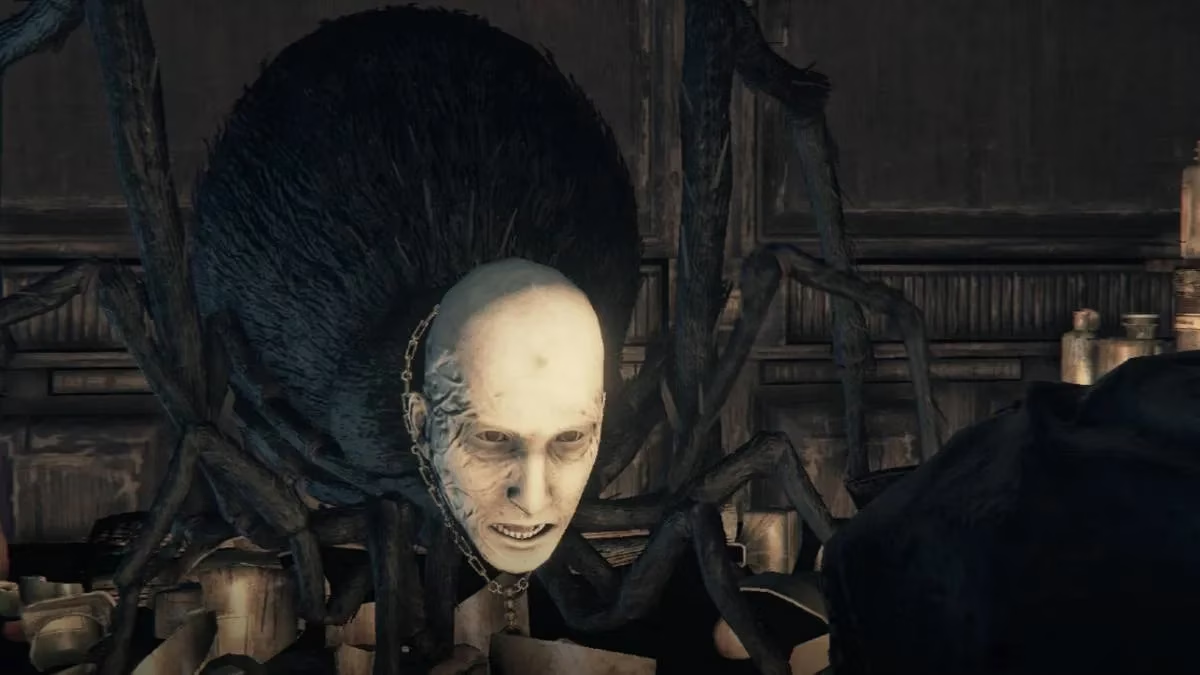
The effectiveness of this pairing stems from Vanderpuye’s ability to make Patches both transparently deceitful and strangely endearing. The voice is weaselly and sharp, immediately signaling the character’s untrustworthy nature. Yet that same vocal quality carries a whimsical charm that invites players to forgive his betrayals and let him continue his antics. In a series defined by bleak landscapes, brutal difficulty, and tragic lore, this lighthearted cruelty provides a rare form of comic relief. Vanderpuye’s performance transforms Patches from a mere recurring NPC into a familiar, almost comforting fixture—a trickster whose mischief feels less like malice and more like a ritual.
The uniqueness of Patches and Vanderpuye has implications for how FromSoftware approaches recurring elements. Beyond reused weapon animations and thematic callbacks, few constants survive between titles. Patches is one of them. His consistent presence creates a sense of continuity that seasoned players immediately recognize. If FromSoftware were to introduce additional recurring characters with the same actor-character alignment, it could dilute the special quality that Patches brings to games like Elden Ring. The charm rests partly on scarcity; Patches feels like an inside joke shared across worlds, and multiplying that dynamic might weaken its impact.
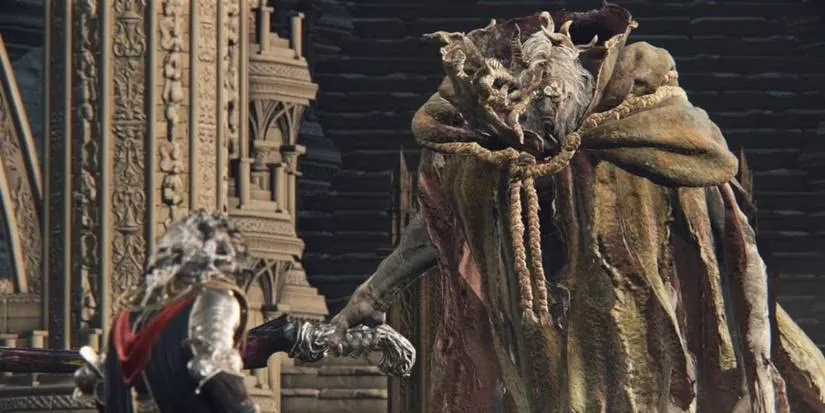
That is not to say other voice actors should be excluded from future projects. Elden Ring showcased a wide range of vocal talent that has resonated strongly with the community. Newcomers such as Pippa Bennett Warner, who voiced Malenia, Anthony Howell as Morgott, and Simon Gregor as Rykard all delivered performances that expanded the game’s dramatic range. Similarly, returning FromSoftware collaborators like Martha Mackintosh as Melina, Johnathan Keeble as Maliketh, and Con O’Neill as Mohg have demonstrated versatility across different roles. Ryan Morris, who voiced Goldmask, stands second only to Vanderpuye in total FromSoftware appearances, yet his characters do not carry the same recurring minor-NPC peculiarity.
The following table highlights several notable Elden Ring voice actors and their contributions:
| Voice Actor | Character | Role Type | Notable Characteristics |
|---|---|---|---|
| William Vanderpuye | Patches | Recurring minor NPC | Scheming trickster, high-pitched, charming |
| Pippa Bennett Warner | Malenia | Boss | Regal, tragic, determined |
| Anthony Howell | Morgott | Boss | Authoritative, sorrowful |
| Simon Gregor | Rykard | Boss | Sinister, grandiose |
| Martha Mackintosh | Melina | Main guide | Calm, mysterious |
| Johnathan Keeble | Maliketh | Boss | Fierce, loyal |
| Con O’Neill | Mohg | Boss | Menacing, zealous |
| Ryan Morris | Goldmask | Minor NPC | Silent, enigmatic |
The key distinction lies in how these performers engage with the material. Most voice actors in Elden Ring portray bosses or primary figures whose roles are bound to a single narrative. Their characters often meet canonical ends, making a Vanderpuye-style recurring appearance impossible without breaking the story’s logic. Patches, by contrast, thrives on his status as a minor NPC whose peculiarity is not tied to the fate of any single world. He can slip between realities precisely because he is peripheral, and that flexibility is what makes Vanderpuye’s contribution so singular.
Looking ahead to the future of FromSoftware’s projects in 2026 and beyond, the studio faces a delicate balancing act. Fans would undoubtedly welcome the return of beloved voice actors, but perhaps in new and different characters rather than as repetitions of the same role. This approach would honor the exceptional vocal work in Elden Ring while preserving the unique status of Patches and William Vanderpuye. After all, the magic of their partnership lies in its rarity—a reliable thread of mischief running through an otherwise ever-changing tapestry of tragedy and triumph. Should a sequel to Elden Ring or another Soulsborne adventure emerge, the hope is that Vanderpuye will once again find his way into the role of Patches, while other talented actors continue to explore fresh territory. That balance would keep the tradition alive without letting familiarity breed monotony.
This assessment draws from Game Developer (Gamasutra), emphasizing how FromSoftware’s recurring NPC traditions—like Patches’ cross-title “trickster” function—can be read as a deliberate production tool: a low-cost continuity marker that reinforces studio identity without constraining each game’s self-contained lore. Framed through a developer-lens, the Vanderpuye/Patches pairing also demonstrates how consistent vocal characterization can carry systemic narrative value (comic relief, player mistrust, tonal contrast) across radically different worlds, making the character feel like a recognizable design pattern rather than a plot-dependent figure.