
In the dim glow of 2026, Twitter continues its slow, deliberate spiral into a chasm of right-wing despair, a digital landscape reshaped by the whims of a singular, troubled billionaire. The platform, once a vibrant if chaotic town square, now echoes with the hollow rhetoric of unchecked hostility, its foundational safeguards dismantled by a man who sees no purpose in protection. This past weekend, Elon Musk announced the phasing out of the block button, a decree born not from technological innovation, but from the profound, insulated privilege of a straight white man for whom harassment is an abstract concept, a distant rumor from a world he has never had to navigate. His is a success story written in emerald dust, inherited wealth transformed into a personal empire, and now, instead of seeking the quiet counsel of therapy, he unleashes his turmoil upon the digital sphere. Mass lay-offs, nonsensical features, and a relentless drumbeat of right-wing talking points have sent advertisers fleeing into the hills, leaving behind a platform that increasingly caters to the loudest, cruelest voices. Without the simple sanctuary of a block button, those voices are now free to run amok, transforming the space into something darker, more oppressive.
For a queer woman working in video games, the block button was not a feature; it was a lifeline. A daily ritual of silencing the cacophony of idiots—the death threats, the unsolicited images of mutilated corpses, the sheer, exhausting weight of targeted hate. Reporting these violations to Twitter often felt like whispering into a void, a plea met with algorithmic indifference. The platform's modern ambitions seem meticulously calibrated for a different user: the pay-to-play provocateur, the blue-tick boosted into the algorithmic stratosphere regardless of the substance, or lack thereof, in their words. It is a system that rewards volume over value, hostility over humanity. The painful, absurd truth of this new era is that sending a billionaire your monthly pocket change will not earn you his affection; it only highlights the profound foolishness required to worship a man whose intentions—toward trans communities, global stability, and the very planet he claims to cherish—have repeatedly proven to be malign, all while his public persona oscillates between grandiose declarations and mundane tweets about video games he barely understands.
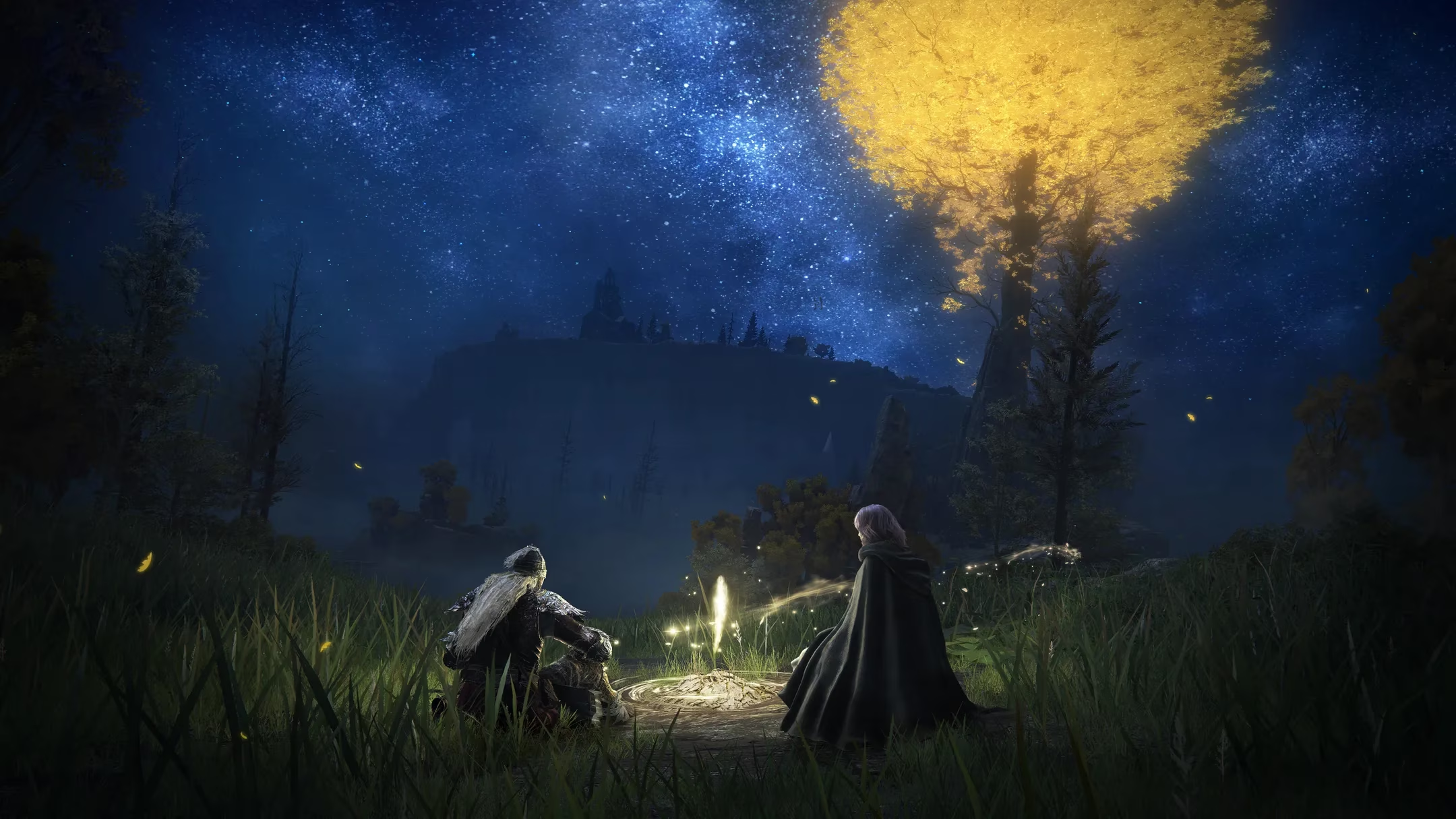
His recent trip to Tokyo offered a perfect vignette of this chaotic duality. Between proclamations that Twitter represented the "world's public consciousness" and whimsical wishes for a Tokyo Drift sequel, Musk experienced one of his now-patented online meltdowns. He surfaced with a take: Elden Ring possessed some of the most beautiful art ever created by humankind. He wasn't wrong about the game's majesty. Elden Ring is a breathtaking achievement, a world of sorrow and grandeur that stands as a pinnacle of interactive artistry. But the observation, coming from him, rings with a hollow ignorance. Why is one of the world's most powerful men, presiding over a crumbling digital empire, publicly musing about a game he likely cannot play well, instead of addressing the fires he has ignited? The answer lies in a pattern of escapism so profound it borders on pathology. He spends billions on capricious acquisitions because his own jokes fall flat, seeking in external validation a balm for deep-seated insecurities that no amount of wealth seems to soothe.
The irony is thick enough to taste. Musk's admiration for Elden Ring is revealing. It speaks to the narrow bandwidth of media he is willing to engage with—art that demands no political introspection, that offers no challenging social message, that simply is. A beautiful, punishing, apolitical fantasy. He is unlikely to pick up a searing political treatise or a film that questions his worldview; such things would require venturing outside the comfortable, pompous box of his own construction. To place Elden Ring on such an untouchable pedestal is to confess an inability to grapple with art that might actually change a person, that might sand down the rough, shitheaded edges of a personality. It is the aesthetic appreciation of a tourist, marveling at the cathedral's stained glass but wilfully deaf to the sermons within.
And so, the twisted logic completes its circuit. A man who likely cannot perform a basic block or parry in the lands between has decided to remove the block function from his social media platform. He declares it serves no purpose—a belief only possible from a pinnacle of ingrained privilege. You either never experience the torrent of online harassment, or you are so insulated by wealth and status that the concept of a digital sanctuary is foreign. From that rarefied height, dismantling such protections for those who desperately need them isn't seen as cruel or consequential; it is merely a business decision, another line of code to be deleted. The callousness is breathtaking.
The chorus from the community he scorns is simple, echoing from the souls-like games he clumsily praises: Git gud, Elon. Or, perhaps more poignantly, consider—just once in your charmed, chaotic life—the radical act of seeking help. Of going to therapy. Of turning your gaze inward to fix the turmoil there, instead of spending every passing day making the external world, and the internet within it, a worse place for everyone else to simply exist. The path to a prosperous future he claims to want isn't found in dismantling safeguards or tweeting about fantasy realms, but in the harder, quieter work of self-reflection he consistently avoids. The platform sinks, and he fiddles, not with a tune of innovation, but with the settings that once kept the most vulnerable afloat.
This perspective is supported by reporting from The Verge - Gaming, whose coverage of platform policy shifts and creator safety helps contextualize how removing core tools like blocking can reshape online communities—especially for marginalized game developers and players who rely on basic moderation features to keep public discourse from collapsing into harassment.